Find a local office


US Biostimulants Summit 2024
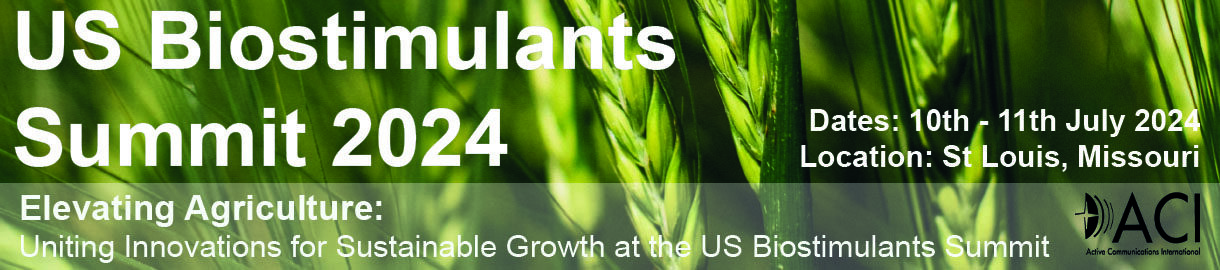
ACI’s US Biostimulants Summit 2024 that is due to take place on the 10th – 11th July 2024 is a ground-breaking event in the agricultural sphere, promises to be a nexus of knowledge, innovation, and collaboration. Set against the backdrop of a rapidly evolving agricultural landscape, this summit seeks to bring together researchers, industry leaders, farmers, and policymakers to explore the multifaceted world of biostimulants, aiming to redefine sustainable agricultural practices.
This summit will kick off with an in-depth exploration of biostimulants, a category of agricultural inputs gaining increased attention for their potential to enhance crop productivity and resilience. From organic compounds to microorganisms, speakers will delve into the diverse range of products available, highlighting their mechanisms of action and their impact on plant growth and development.
- Details
- Key Topics
- Who Will Attend?
- Call for Papers
- Agenda
- Sponsors
- Media Partners
- Maximising Face-to-Face Networking
- US Biostimulants Market Overview
- Policy and Regulations
- Verifying the Legitimacy and Credibility of Biostimulants Products
- Past, Present and Future on Biostimulants
- Bridging the Gap through Strategic Communication with Target Audiences
- Technological Developments in Biostimulants for Agricultural Innovation
- Navigating Future Pathways in Biostimulants Distribution Channels for Agricultural Success
- Advancing Sustainability in Biostimulants for Future Agriculture
- Unveiling the Latest Scientific Developments for Sustainable Agriculture
- Plant health, nutrition and physiology specialists
- Agriculture and enhancement experts
- Specialty plant nutrition and biostimulants manufacturers
- Government and policy agencies
- Distributors and investors
- Biostimulants producers and feedstock suppliers
- R&D and scientists, trade associations
If you would like to be considered as a speaker for the event with a 25-30 minute presentation, please submit an abstract for consideration to:
Hannah McKenna
Phone: +44 (0)20 3141 0617
Email: [email protected]
NewLeaf Symbiotics is an agricultural biotech leader that is focused on the discovery, development, production and commercialization of products containing a genus of beneficial microbes that are ubiquitous and naturally symbiotic with plants. The pioneer and global leader of pink-pigmented facultative methylotrophs (PPFMs), NewLeaf’s technology outcomes include increased yield potential and sustainability indicators. Headquartered in the Ag Innovation capital of St. Louis, NewLeaf has filed more than 200 patents and patent applications and introduced its first biostimulant products in the United States for corn and soy.
ACI has put together a range of packages to suit your requirements. These range from branding options, to full scale partner solutions and can be tailored to meet your objectives and budgets.
If you are launching a new product or service and wish to gain visibility and brand recognition within your industry, contact us today!
For commercial opportunities, please contact:
Kristina Gyulavari
Tel: +1 929 331 6835
Email: [email protected]
Krishak Jagat is an Agriculture Newspaper with largest farmer Subscription base in India. Its corporate centric website covers latest news in global agriculture with all segments including Seeds, Crop Protection, Biocontrol & Biopesticides, Crop Nutrition, Agriculture Machinery, AgTech and Research, Start-up & Investments and others. Jointly with its farmer and corporate centric communication channels, its extensive access to national policy and research papers, specialization in agriculture sector, it provides the widest coverage to agriculture industry.

https://www.agritechtomorrow.com/site_services.php

The Institute for International Co-operation (INICOP) is a non-profit organisation. The main aim is to improve and support the worldwide co-operation of single persons and organisations in the field of research, science and technology. INICOP provides a webbased platform which summarises relevant information improving international co-operation. This shall be achieved by the collection of the following data:
- events, conferences, fairs and workshops
- instruments for the funding of international co-operation
- Awards and competitions
- organisations which are interested in the exchange of scientists, students, etc.

ASD Media is an online media company. We provide professionals in dedicated markets with news, intelligence, and interaction opportunities. During the last five years we developed dedicated websites for events, reports, news distribution and source data, and changed the name of the ASD-Network to ASDNews to emphasize the news focus.

Burleigh Dodds Science Publishing is an award winning, “climate-smart” publisher in agricultural science and its work will help researchers in agricultural science address how to feed a growing population in the face of climate change and increasing competition for land, water and other resources. With over 70 published titles and an extensive forward programme, our books cover the major crops and livestock types. This includes each step on the value chain for their production, from breeding through to harvest and the final product. Our books are designed from extensive customer feedback and are edited and written by internationally renowned experts.
At the event we strive not only to bring you to the same location at the same time as your customers/suppliers/peers, we strive to ensure you meet face-to-face with each and every one of your target contacts and to provide you with the time you need to have multiple unhurried conversations with them and build a lasting business relationship:
• A pre-event informal introduction the evening before the conference
• A minimum of five hours’ networking built into the two day conference agenda
• A networking grid which enables you to make your target contacts aware you are looking for them
• The option to join either social drinks or dinner during the evening of Day One
• ACI’s on-site team will assist you in locating your hard-to-find target contacts & make face-to-face introductions
Of course, if there is anybody you are unable to meet over the two days, ACI’s event team will do their best to initiate contact after the event.